Showing posts with label inspiration. Show all posts

A Part Together - solo show at farm projects

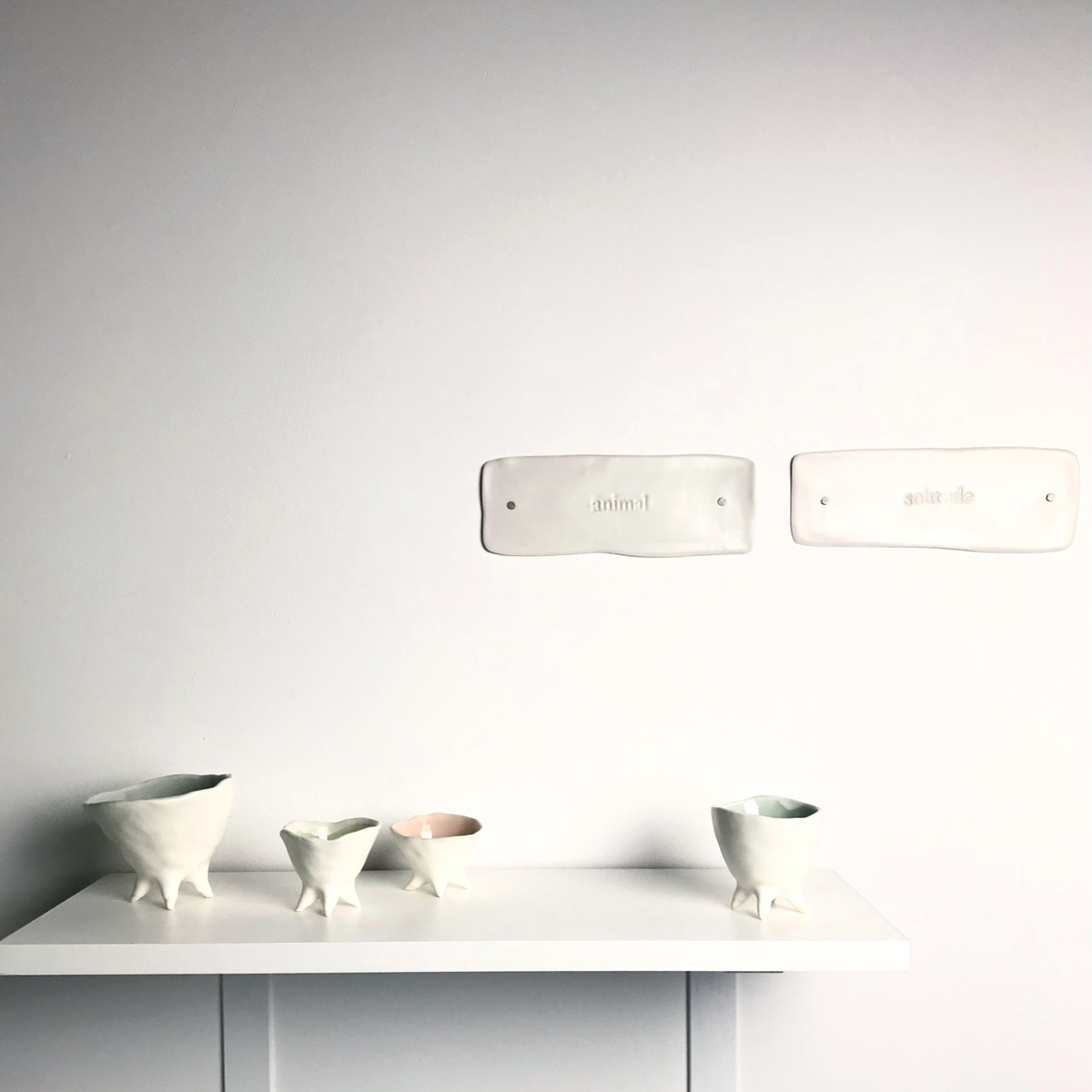
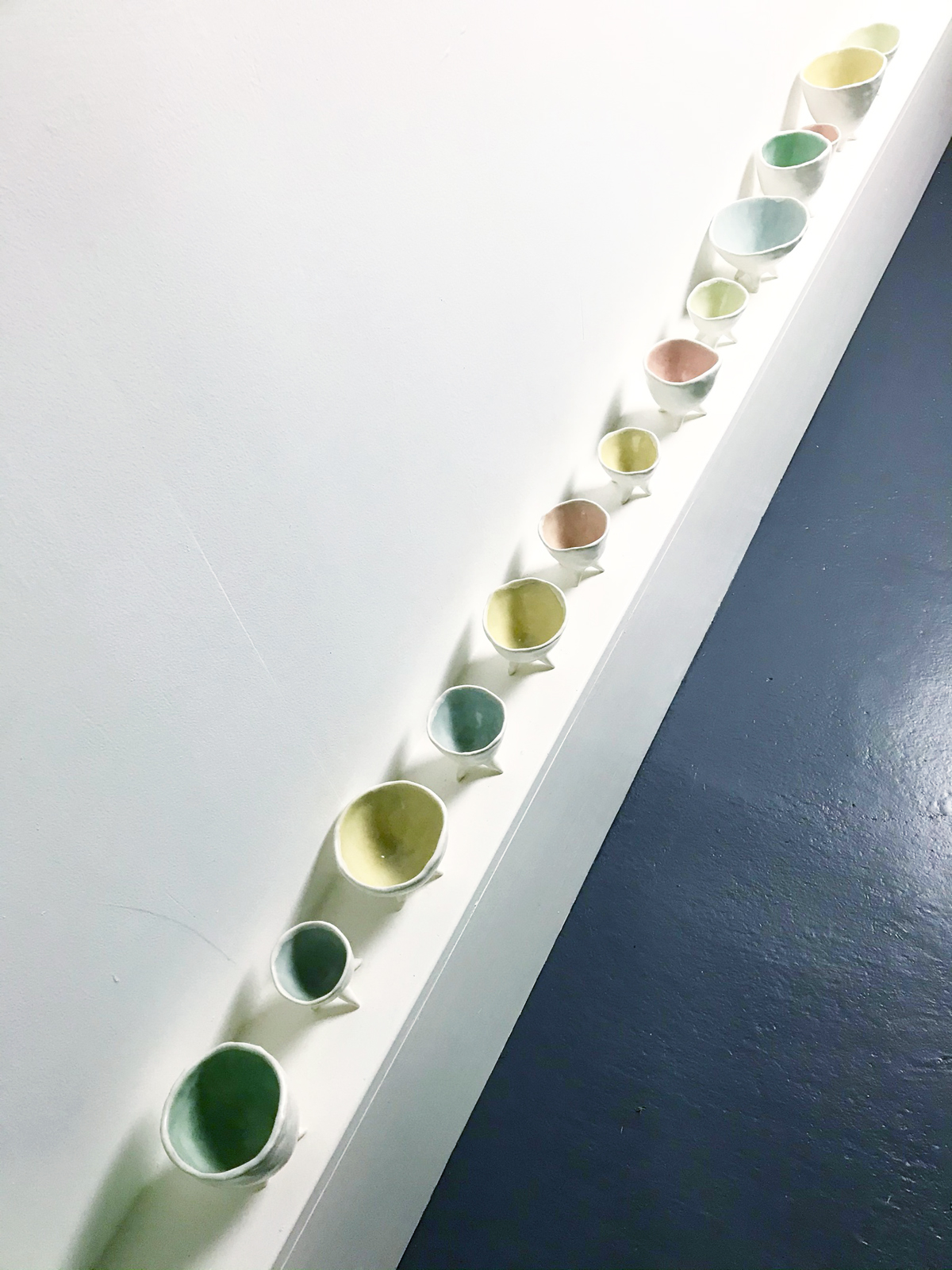
My solo sculptural installation at FARM, A Part Together is a narrative journey. It is an exploration of ceramic material through hand-building and slip-casting. It is a weaving together of nature with human form, and of thoughts drifting during the making process, asking, seeking and exploring. 


The free-standing sculptures echo tree trunks where the roots sink into the ground.


The small pinched pots are like funny sprites popping up among flowers.


The "remnant shells" are hollowed out remains, sometimes found enveloped in vines, home to insects and other magical creatures. The wrought iron wall mounts were forged by Ken Roby in his Ohio-based studio, The Village Blacksmith.


The word tiles are thoughts that surface during the making process. 

Growing up in St. Petersburg, Russia, I was surrounded by the historically rich world of Imperial Russia. Summers were spent outside the city, at my family dachya, not far from tsars’ summer marble and stone residences. In direct contrast, our rustic dachya was built by great-grandfather Simon, with wood found on the property.   

Family legends describe Simon’s soft spoken demeanor and  the healing power of being in his presence. Great-grandpa Simon built the dachya after his return from Siberia. He served in exile after being found guilty of owning his own business. 

Surrounded by a deep pine forest, he found solace in working with his hands. Immersed in nature, it was an escape from busy city life, perhaps an escape from his Siberian experiences. His serene presence is still felt there. The meditative repetitive motion of hand-building with porcelain, connects me to experiences from the dachya. With nature as my muse, my work explores human vulnerability, fragility, unease, and resilience. 


jungle living


In January through February of 2009, I had the honor of living in the Amazonian rainforest for three weeks. I wanted to repost this blog entry as a reminder of what is being lost right now as the forest is being burned down. My heart is breaking.

02.19.09 For the past two weeks I have been living at a science research station located in the middle of a nature preserve deep in the rain forest. The jungle is rich with inspiration for my ceramics, from the voluptuous trees to the exotic insects and flowers. This is the only place in the Amazon where our little camp and the sister camp a few miles away are the only human dwellings as far as the eye can see. We are the intruders here, nature is quick to disassemble anything we erect. It is truly a humbling experience. I can't even bring myself to squash a cockroach, knowing that I am in his house.

The Inselberg and Pararé camps are well stocked with food and alcohol. A nightly ritual is to enjoy a small cocktail: rum, sugar, and lemon right off the tree. Everyone takes turns cooking dinner. Meals have been buttery, and yummy.


Sleeping in an open carbet (four posts and a plastic roof, no walls) in the jungle is quite the experience: it is never quiet, filled with frog, cricket, bird and cicada calls. The howler monkeys are probably the most startling. They sound like a soundtrack to a haunted house, a howling growling spooky wind. Last night their call sounded so close, as if they were perched on a tree above our carbet. They were incredibly loud. This afternoon they hung out in the trees eating leaves very near camp. The howlers' gentle ways are in stark contrast to their ferocious call.


Surrounded by scientists from all over the world gathering specimens for their Masters degrees and PhDs, the conversations are spectacular. I have learned so much about the insect and mammal world. I will spend months digesting this trip, and exploring it through my ceramic work.

jungle in hand

During my walks through the rain forest of French Guiana, I came upon fascinating flora, the shapes and textures of which endlessly provide inspiration for my work. Here is a small sampling of the incredible diversity I experienced there. All were quickly returned to the forest floor where they were found. Click on the images for a larger view.


oh the beauty of west coast nurseries

My friend Lisa and I decided to visit the nurseries of San Francisco on my last day in California. I have been falling in love with succulents for the past few years, and have started carrying them in the shop in greater numbers. I love the variety of textures and colors they offer. And love when they bloom for me. We started our day at FlowerLand, with a delicious latte and scone in hand, it was a joy to walk around the Berkeley neighborhood nursery. The diversity of gardening products gave me a few ideas for gleenashop. I dream of partnering with a coffee shop to be able to offer a similar environment in Cleveland. Maybe some day.


The second stop was Flora Grubb Gardens in the Bayview neighborhood. Nestled among industrial wholesale warehouses, Flora's nursery is an unexpected oasis. Lush spectacular plants line the walkways, and hang from walls and trellises. Entering, I was transported to another country, expecting to see monkeys and colorful parrots in the gently swaying giant palm leaves. Hours can be spent there finding treasures. Coffee and baked goods are also available, and the bathrooms are gorgeous.


For lunch, a delicious All Good Pizza food truck is parked in a lovely courtyard across from Flora Grubb. Looks like the gardeners from FG have done some work there, it is surrounded by pretty plantings of succulents and cacti. The pizza is delicious. What an inspiring yummy day!

transferware


Imagery has been a part of ceramics for centuries. There are many ways of applying an image to a ceramic surface, and “transferware” is a particular style of decorative ceramics.


Transferware is created by transferring a printed image onto the surface either under or over a glaze. This transfer technique, the predecessor to a more modern technique I use on gleena, was developed in England in the mid-18th century, particularly around the Staffordshire region.

The process starts with an engraved copper plate similar to those used for making paper engravings. The plate is used to print the pattern on tissue paper, then the tissue paper transfers the wet ink to the ceramic surface. The ceramic is then fired in a low temperature kiln to fix the pattern. This can be done over or under the glaze. The process produces fine lines similar to the engraved prints in old books. Before transfer printing ceramics were hand painted, a laborious and costly process. You can find more information, and sample patterns, on the Transferware Collector's Club website.

I love the backs of the plates, shown below with the mark of the maker, just as much as the fronts, if not more. This is where graphic design has met ceramics over the centuries.