Showing posts with label ceramics. Show all posts

A Part Together - solo show at farm projects

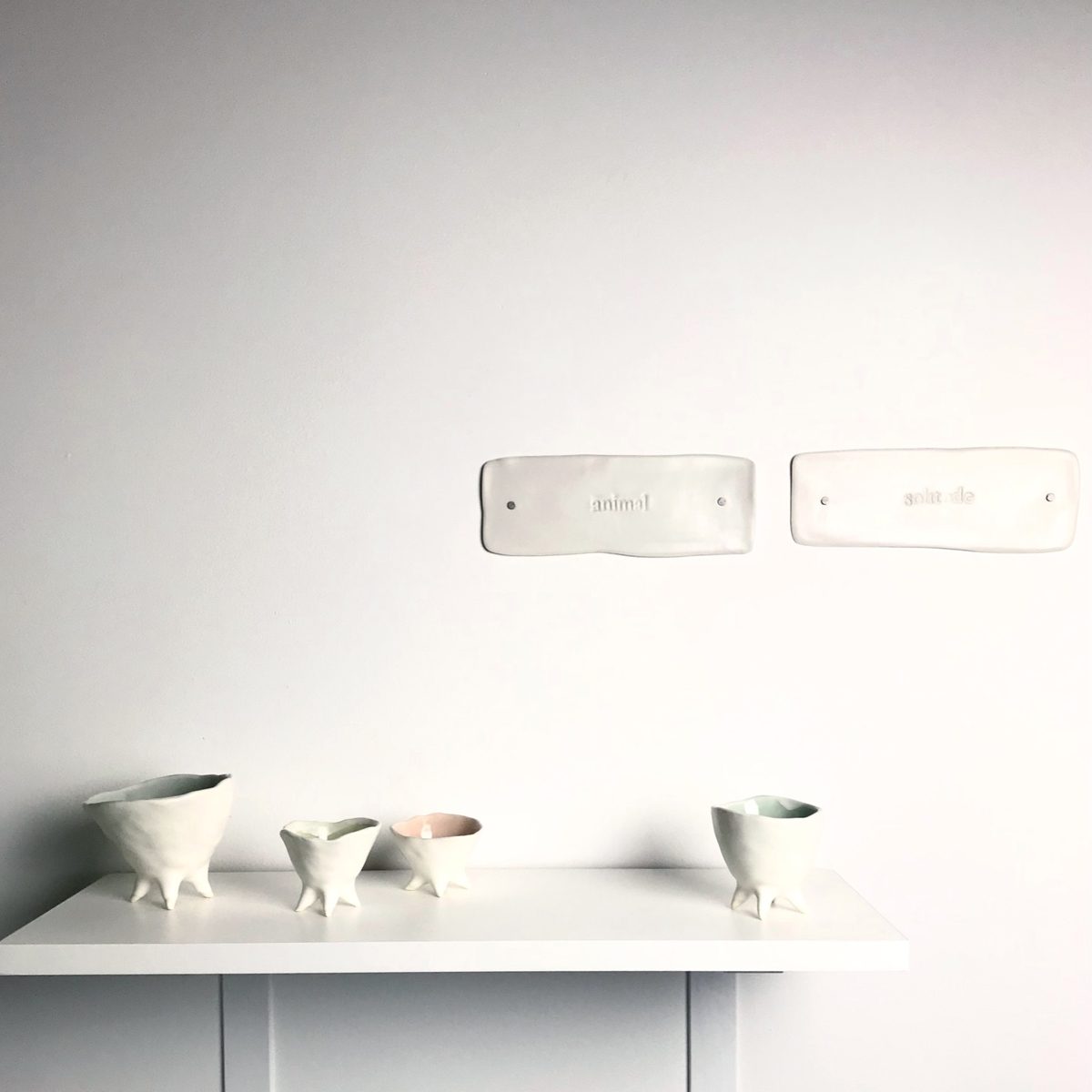
My solo sculptural installation at FARM, A Part Together is a narrative journey. It is an exploration of ceramic material through hand-building and slip-casting. It is a weaving together of nature with human form, and of thoughts drifting during the making process, asking, seeking and exploring. 


The free-standing sculptures echo tree trunks where the roots sink into the ground.


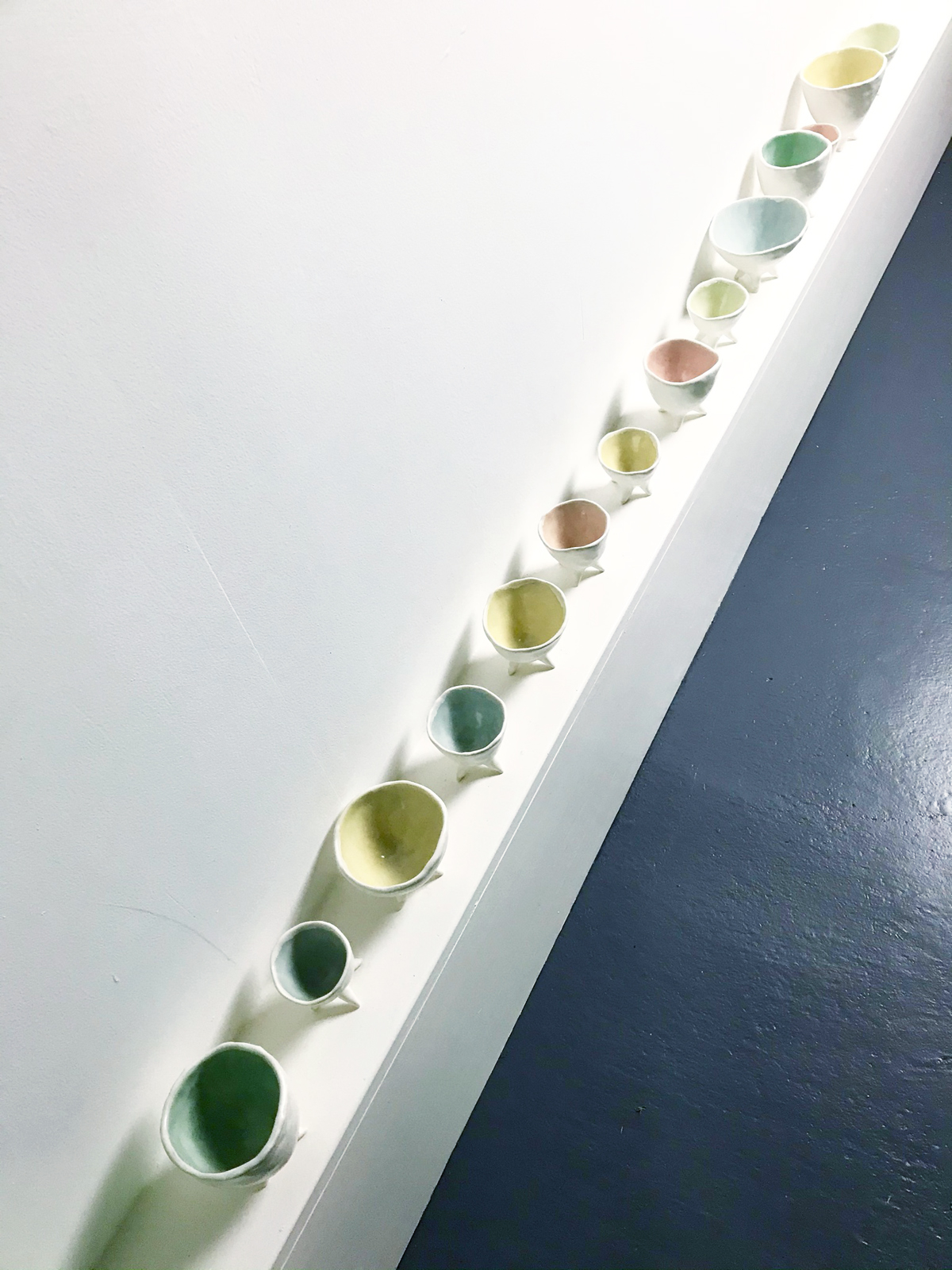
The small pinched pots are like funny sprites popping up among flowers.


The "remnant shells" are hollowed out remains, sometimes found enveloped in vines, home to insects and other magical creatures. The wrought iron wall mounts were forged by Ken Roby in his Ohio-based studio, The Village Blacksmith.


The word tiles are thoughts that surface during the making process. 

Growing up in St. Petersburg, Russia, I was surrounded by the historically rich world of Imperial Russia. Summers were spent outside the city, at my family dachya, not far from tsars’ summer marble and stone residences. In direct contrast, our rustic dachya was built by great-grandfather Simon, with wood found on the property.   

Family legends describe Simon’s soft spoken demeanor and  the healing power of being in his presence. Great-grandpa Simon built the dachya after his return from Siberia. He served in exile after being found guilty of owning his own business. 

Surrounded by a deep pine forest, he found solace in working with his hands. Immersed in nature, it was an escape from busy city life, perhaps an escape from his Siberian experiences. His serene presence is still felt there. The meditative repetitive motion of hand-building with porcelain, connects me to experiences from the dachya. With nature as my muse, my work explores human vulnerability, fragility, unease, and resilience. 


transferware


Imagery has been a part of ceramics for centuries. There are many ways of applying an image to a ceramic surface, and “transferware” is a particular style of decorative ceramics.


Transferware is created by transferring a printed image onto the surface either under or over a glaze. This transfer technique, the predecessor to a more modern technique I use on gleena, was developed in England in the mid-18th century, particularly around the Staffordshire region.

The process starts with an engraved copper plate similar to those used for making paper engravings. The plate is used to print the pattern on tissue paper, then the tissue paper transfers the wet ink to the ceramic surface. The ceramic is then fired in a low temperature kiln to fix the pattern. This can be done over or under the glaze. The process produces fine lines similar to the engraved prints in old books. Before transfer printing ceramics were hand painted, a laborious and costly process. You can find more information, and sample patterns, on the Transferware Collector's Club website.

I love the backs of the plates, shown below with the mark of the maker, just as much as the fronts, if not more. This is where graphic design has met ceramics over the centuries.


new in the shop

I have been expanding the double dipped line. I love overlapping two glazes, and seeing what happens at the intersection. Every time, it is a surprise, each piece unique, like a painting.
Nature inspired letter-pressed cards by Heartswell are a perfect compliment to gleena and the selection of air plants I now carry.
Wall hangings are a new direction to explore for me, this hearts garland was a big hit for Valentine's Day. I find it is also a good baby, wedding shower, and a Mother's Day gift.
My studio is part of the shop, and my apron is usually coated with porcelain as I work on making gleena daily. photo by Kris Craig
While winter turns the world blue outside, it is warm and cozy in the shop. Come visit!

final presentations from risd students,
a feast for the senses

For their final project, my tableware students had to create dinner place settings for at least four people. Each setting had to have at least three pieces, and the table had to have a centerpiece. These parameters were open to interpretation to fit the theme of their dinner setting.

The sets could be hand-built, thrown, or slip-cast; the techniques we covered during the semester. The finals were presented at Ewing House, a small cozy building on RISD’s campus. What an incredible time we had presenting, eating, talking. It was the most satisfying critique I have attended. Perhaps because I saw the students grow so much in their knowledge of clay and tableware production process? Here are five presentations that show the variety of ceramic production techniques used in the class, so much for the eye to feast on.


^Abigail Heingartner carved the originals for her shapes out of plaster, made molds, then slip-cast her pieces in porcelain. The texture on the bowls and tumblers was created by carving into the slip-cast piece. Abby baked delicious cheese biscuits presented in the oval serving dish, accompanied by a thrown on the wheel butter crock. Abby hand-built the votive candles for the centerpiece, and filled them with wax.


^Adriana Gallo worked with porcelain to hand-form the Italian feast serving plates and platters. The organic shapes were slumped over found beach rocks, and the rims pinched for a lovely undulating edge. Serving utensils were also hand-formed. Adriana made a whole lot of anti-pasta, presented on a striped tablecloth, transporting us to southern Italy. We ate this set up outside, of course.


^Brandon Saisho threw his bowls and cups on the wheel, then built the table to hold the pieces in the centerpiece/storage cabinet. Each piece had a walnut lid, which could also be used as a coaster. Brandon made black sesame pudding, rice, and red bean soup to serve to the class. A very meditative set up, we spent a lot of time exploring the table/cabinet, cradling the dishes, experiencing the exotic flavors of the food, and talking.


^Briana Duffy’s set was formed out of found objects and sculpted plasticine. Bree then made molds of the models, and slip-cast four plate shapes. Her centerpiece was assembled out of found shells held together with plasticine. This model was made into a plaster mold, and then cast in porcelain. Inspired by the ocean, the shapes and glazes evoke wave-washed stones, bits of sand dollars, and shells found on a beach walk. Picking up on the flows of the slip-cast porcelain, the glaze shows off the one-piece mold process. Bree served spring rolls with her dishes.


^Abigail Griswald threw her shapes on the wheel, made molds of them out of plaster, and used the molds to press in slabs of porcelain. The result is a gorgeous set of rustic dishes, with a satisfying weight, satiny glazes, and an inviting personality. The edges are exquisitely formed, creating a sculptural effect when stacked. Abby also made a tiled/mosaic tray, and woven matching place mats to complete her extensive set.

So much talent in one class.